How to Vet an Asbestos Removal Contractor Before You Hire
Updated Jul 2026 · 5 min read
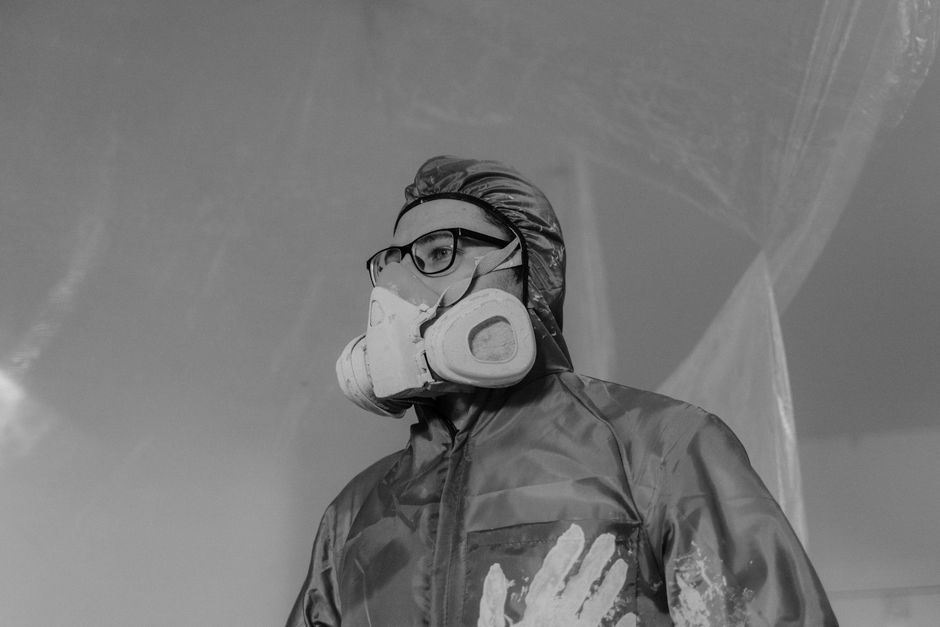
The hire is the riskiest decision
Getting asbestos out of a building safely depends less on the material than on who you let touch it. A careless crew can spread fibers through a house that was clean before the job started, and you may not learn about it until much later. The listings in a directory give you a shortlist. The questions below tell you which of those companies deserve a callback.
Confirm they are licensed for abatement, not just construction
Asbestos work is regulated separately from ordinary building work. Most states require abatement contractors and their workers to hold a specific asbestos license that is distinct from a general contractor's registration, with periodic refresher training set by the state. Ask for the license number and check it against your state environmental or labor agency yourself, rather than accepting a photocopy. A company that gets cagey at this point is telling you something useful.
Ask who is actually on site
The person who quotes the job is not always the person who does it. Ask whether the removal is performed by the company's own trained employees or handed to a subcontractor, and whether a certified supervisor stays on site while the work is happening. You want the license you checked to belong to the people in the plastic suits, not just the name on the truck.
Keep the tester and the remover separate
There is a built-in conflict of interest when one company inspects the property, declares a problem, removes it, and then signs off on its own work. Independent clearance is the cleaner arrangement: after removal, air sampling is handled by a third-party lab or an industrial hygienist who does not profit from the abatement. Ask how post-removal clearance testing is done and who reads the results. If the same crew both creates the invoice and grades its own homework, push for an outside check.
Get the containment and disposal plan in writing
A real plan describes how the work area will be sealed, how the negative-air equipment vents, and how waste is bagged, labeled, and hauled away. Licensed disposal sites issue paperwork that follows the material to where it ends up, and a legitimate contractor keeps that record and will share a copy. If the answer to "where does it go" is a shrug and "we handle it," the plan is not finished.
Insurance that actually covers asbestos
Standard general liability policies frequently exclude pollution, and asbestos in particular. Ask for a certificate of insurance and confirm that asbestos or pollution coverage has not been carved out of it. Workers' compensation matters as well. If an uninsured crew member is injured on your property, the fallout can land on you, so ask for proof rather than a verbal assurance.
Notification and permits are part of the job
Depending on the size of the work and local rules, a contractor may be legally required to notify a government agency before the first wall comes down, sometimes with a waiting period built in. Under the federal NESHAP program administered by the EPA, certain renovation and demolition activities involving asbestos must be reported in advance. A contractor who already knows the notification requirement for your area, without having to look it up mid-conversation, is usually one who does this regularly. Handling the permit is their responsibility, not yours.
Watch how the quote is built
Be skeptical of a firm number that shows up before anyone has looked at the material or read a lab report. Sealed floor tile in good condition is a very different job from crumbling pipe insulation in a boiler room, and an honest company prices the work only after it knows which one it is facing. Ask what could change the price once the walls are open, and get that answer in writing. A written scope keeps a mid-job surprise from turning into a negotiation while your home is wrapped in plastic and you have nowhere else to sleep.
Red flags worth walking away over
- Pressure to skip testing and go straight to removal
- Reluctance to share a license number or an insurance certificate
- One crew that inspects, removes, and clears its own work with no outside lab involved
- Cash-only terms, or no written contract at all
- Vague answers about where the waste actually goes
Any single item here is a reason to slow down. Two or more, and the low bid stops being a bargain.
A short call script
When you phone the companies on your list, you can cover most of what matters in a few minutes:
- Are you and your on-site crew licensed for asbestos abatement in this state, and what is the license number?
- Who performs the clearance testing after the work, and are they independent of your company?
- Does your insurance include asbestos or pollution coverage, and can you send a certificate?
- Who files the required notification with the agency, and how long before the start date?
- What is included in the written scope, and what would change the price once you begin?
The answers matter, but so does the manner. A contractor who welcomes these questions tends to be the one you want. A contractor who treats them as an insult tends to be the one you were right to screen out.
After you choose
Keep every document the job generates: the signed scope, the insurance certificate, the notification confirmation, the disposal records, and the clearance results. If you ever sell the property or file an insurance claim, that paper trail is proof the material was removed by licensed people and that the air was cleared afterward. It is also the simplest way to hold a contractor to what they promised on the phone.